Showing posts with label Football Players. Show all posts

Thursday, June 2, 2011

Daniel Guiza

Daniel Gonzalez Güiza (born 17 August 1980) is a Spanish footballer who plays for Fenerbahçe S.K. in Turkey, as a striker. A late bloomer, he made a name for himself at the age of 27, being crowned La Liga topscorer with RCD Mallorca. Subsequently, he helped the Spanish national team win the UEFA Euro 2008, and signed with Fenerbahçe in Turkey shortly afterwards. Having started playing on the streets of his hometown of Jerez de la Frontera in Cádiz, Güiza used to hide behind trees in an attempt to avoid the running, despite being then coached by boyhood idol Kiko, who begun his professional career with local Cádiz CF. He eventually made it into his local team, Xerez CD and, after one season there, first showed his eye for goal at third-tier side Dos Hermanas CF, loaned immediately after RCD Mallorca bought him. Such performances saw him make his debut in La Liga at the age of 19, but he would fail to perform, being demoted to the B team where he scored 28 goals in 70 games. Güiza was then loaned out to Recreativo de Huelva, but could not find a secure place in the team, and was soon after loaned to FC Barcelona B, where he scored five third division goals. Subsequently, he moved to Ciudad de Murcia in division two, where his career saw a turning point, with two consecutive top-five finishes in the topscorers' list (runner-up in the 2004–05 campaign). On 8 July 2008, Güiza signed for Turkish club Fenerbahçe S.K. for €14 million. In his first month, he managed to score twice in the Süper Lig and another two in the club's UEFA Champions League campaign. Güiza ended a long scoring drought on 22 March 2009, with an early goal against Bursaspor, as Fenerbahçe lost 2–1 in the dying minutes of the game. Prior to the beginning of the 2009–10 season, he scored three against Budapest Honvéd FC in the UEFA Europa League third round, in a 5–1 home win (6–2 on aggregate), netting his first in the domestic competition in matchday one against Denizlispor, in the first minute of the game. During his first two seasons with the Istanbul club, Güiza helped the team to consecutive Turkish Cup finals, netting in the 2008–09 edition, a 2–4 loss against Beşiktaş JK.

Güiza was a late bloomer on the international stage, having been first called-up by Spain on 8 November 2007 (aged 27), for UEFA Euro 2008 qualifiers against Sweden and Northern Ireland, as the national team was already qualified for the finals in Austria and Switzerland. He made his international debut against the latter on 21 November, in a 1–0 home win, in Las Palmas de Gran Canaria. Güiza was subsequently selected to the final squad of 23 but, despite being the league's top scorer in that year, still doubted his chances of being picked: "I was really scared I'd miss out, because being the league's top scorer doesn't guarantee you a place". On 18 June 2008, he made his debut in the tournament, and scored Spain's winning goal against Greece during the dying moments of the last match group stage match. In the quarterfinals, Güiza came on as a substitute against Italy, missing the team's fourth attempt in an eventual penalty shootout win. In the semifinal match against Russia, he scored his second international goal, in a 3–0 win: after receiving a pass from Cesc Fàbregas, he quickly side-flicked it over the goalkeeper. Güiza played 15 minutes in the final against Germany after replacing Fernando Torres (who scored the game's only goal), and came very close to assisting Marcos Senna. On 15 October 2008, Güiza came on as a late substitute against Belgium and soon after assisted David Villa who scored the winning goal in a close 1–2 encounter. After an article circulated in January 2009, involving details about personal life and behaviour in training, Güiza's international career future was questioned. Such reports on his behaviour became debatable due to the unreliable sources and any rumours of him being dropped from the Spain team were put to rest when Vicente del Bosque called him up for his services for the 2010 FIFA World Cup qualification matches against Turkey, where he solidified his superb performance against Belgium, once again coming on in the dying minutes and assisting a last-minute winner during the match held in Istanbul. On June 1, 2009, Güiza was selected to the 2009 FIFA Confederations Cup. On June 28, he came from the bench as the national team trailed hosts South Africa (0–1) in the third-place match, and responded with a spectacular brace in the last two minutes, as Spain eventually won the game in extra-time (3–2).

Daniel Guiza Happiness Expression

Daniel Guiza Pray To God

Daniel Guiza Celebration

Daniel Guiza Seize The Ball From His Rival

Daniel Guiza Lead The Ball Perfectly

Daniel Guiza In Press Conference

Wednesday, May 18, 2011

Filippo Inzaghi

Filippo "Pippo" Inzaghi, Cavaliere Ufficiale OMRI (born 9 August 1973 in Piacenza) is an Italian World Cup and UEFA Champions League-winning footballer who plays for Serie A club Milan. Inzaghi became the first striker to score in all international club competitions open to European teams after his double against Boca Juniors during the FIFA Club World Cup final in 2007. Filippo Inzaghi is currently the second all time most prolific goal scorer in European club competitions with 70 goals (only beaten by Raúl's 72 goals). He is also Milan's top international goal scorer in the club's history with 43 goals. He also holds the record for most hat tricks in Serie A (10), and the UEFA Champions League (3 - tied with Michael Owen). The brother of fellow footballer Simone Inzaghi, Inzaghi got his start playing for hometown club Piacenza Calcio as a teenager in 1991, but made only two league appearances before being loaned to Serie C1 side Leffe, with whom he scored an impressive 13 goals in 21 matches. In 1993, Inzaghi moved to Serie B club Verona and scored 13 goals in 36 league appearances. Upon his return to Piacenza, he scored 15 times in 37 games helping his team win Serie B and proving himself to be an exciting young prospect. Inzaghi made his Serie A debut when he transferred to Parma A.C. in 1995, but scored only twice in 15 Serie A matches. One of these two goals came against Piacenza Calcio, making him cry. He added another two goals in European competition. The following season he moved on to Atalanta B.C., finishing as the Capocannoniere (Serie A's top scorer) with 24 goals, and scored against every team in the league. He was awarded Serie A Young Footballer of the Year, and was the team captain in last game of the season.

But, he was soon on the move once again to his sixth team in seven seasons, this time to Juventus F.C. for a reported 23 billion Italian lire. He formed a formidable attacking partnership along with Alessandro Del Piero and Zinedine Zidane, a tandem which would last for four seasons, marking Inzaghi's longest stint with one team at the time. During his time at Juventus F.C. he scored two Champions League hat tricks (against Dinamo Kiev and Hamburger SV), and he was first player to do so. Juventus won the Scudetto in the 1997–98 season in which Inzaghi scored a decisive, Scudetto winning hat trick against Bologna, but lost 1–0 in the Champions League final to Real Madrid.Despite a very good tally of 89 goals in 165 games for the Bianconeri, Inzaghi was soon benched in favour of David Trézéguet, and later signed for A.C. Milan for reported 70 billion Italian Lire, or 45 million Euro cash plus Cristian Zenoni. (Sky Sports reported a smaller total figure, £17M) for the 2001–02 campaign by coach Fatih Terim. Juventus announced that the sale of Inzaghi produced a net profit of €31M to the club. However, Inzaghi suffered a knee injury and missed the first half of the season. Upon his return, he was able to forge a strong goalscoring partnership with Andriy Shevchenko, and he soon racked up an impressive trophy count with the Rossoneri, among them the 2002–03 Champions League (in which Milan defeated his previous team, Juventus, in the final on penalties), along with the 2003 Coppa Italia and the 2003–04 Scudetto. In 2002–03 Champions League campaign he scored his record third Champions League hat trick against Deportivo La Coruna in the Group stage and decisive goal in quarterfinals against Ajax, totalling 12 European goals in that season. In November 2004 he signed a contract extensionWith 70 goals Inzaghi is the second highest scorer in European club competitions behind Raúl. He became the first player to score two Champions League hat tricks (both with Juventus) when he netted a treble during a 4–4 group stage draw with Hamburg on 13 September 2000; his first was in a 4–1 victory over Dynamo Kyiv during the 1997–98 quarterfinals. Inzaghi scored a record third Champions League hat-trick in a 4–0 win against Deportivo in the 2002–03 season, while playing for Milan. This record would later be tied by Michael Owen, who has scored two hat-tricks for Liverpool and a third for Manchester United.Inzaghi earned his first cap for Italy against Brazil on June 8, 1997, and has since scored 25 goals in 57 appearances. He was called up for the 1998 FIFA World Cup, Euro 2000, the 2002 FIFA World Cup and the 2006 FIFA World Cup. Inzaghi was Italy's top goalscorer during the qualifying rounds of the 2002 World Cup and Euro 2004, but missed the latter due to injury.

Filippo Inzaghi Giving Applause For His Team

Filippo Inzaghi Get a Trophy

Filippo Inzaghi Funny Pose

Filippo Inzaghi Makes A Goal

Filippo Inzaghi Celebration

Tuesday, May 3, 2011

Adrian Mutu

Adrian Mutu (born 8 January 1979) is a Romanian footballer who plays as a striker for Italian Serie A club Fiorentina, and the Romanian national team. Mutu began his professional career with his home club Argeş Piteşti. He made his debut on 15 March 1997 against Oţelul Galaţi and went on to score 11 goals in 41 games before sealing a transfer to Dinamo Bucureşti.His strong performances for Dinamo Bucureşti meant that Mutu did not spend long playing in the Romanian capital. He scored 22 goals in 33 games in total and played an important role in Dinamo's league and Romanian Cup success. However by the time that Dinamo lifted these trophies, Mutu had already left to play for Internazionale.Having joined Inter midway through the season, Mutu made an immediate impact on his debut for the Italian side, in the Coppa Italia scoring within nine minutes of his appearance against derby rivals AC Milan to help Inter to a 3–2 victory. However, Mutu failed to replicate his form in Serie A, playing only ten games for the Nerazzurri without scoring, partially due to 3+2 non-EU quota.In 2000, Mutu was sold to Verona in co-ownership deal. The Veneto side has also signed Mauro Camoranesi (later team-mate at Juventus) and young rising star Alberto Gilardino (later team-mate at Fiorentina) that season but almost relegated after winning the relegation tie-breaker playoffs. In June 2001, Verona bought Mutu outright, in although the quota system was abolished during the season.In the 2002–03 season, Mutu was loaned to Parma with the option to purchase him outright., followed Gilardino who arrived in June. At Parma, he met coach Cesare Prandelli (also at La Viola) and partnered Adriano Leite Ribeiro to form a deadly striking duo. He also met Sébastien Frey, Marco Marchionni and Alberto Gilardino who all later played for Fiorentina. In August 2003, Chelsea paid Parma €22.5m (around £15.8m) for Mutu's transfer as part of new owner Roman Abramovich's spending spree, He started with four goals in three matches, including two in a 4–2 victory over London rivals Tottenham Hotspur, but Mutu scored fewer goals as the season progressed. In the 2004–05 season, Mutu had a difficult relationship with the club's new manager José Mourinho, with each accusing the other of lying about whether the player was injured for a World Cup qualifying match against the Czech Republic. In September 2004, he failed a drugs test for cocaine and was sacked on 29 October 2004. He also received a 7 month ban and a £20,000 fine from the Football Association. The ban ended on 18 May 2005.


ADRIAN MUTU BEST GOALS PT.1

Chelsea started to seek compensation from Mutu in early 2005. The Football Association Premier League Appeals Committee decided that the player had committed a breach of his contract without just cause which made Chelsea eligible to claim the compensation. Mutu started his first appeal to the Court of Arbitration for Sport (CAS) but the case was dismissed. On 11 May 2006, Chelsea applied to FIFA for an award of compensation against Mutu. In particular, the club requested that the FIFA Dispute Resolution Chamber (DRC) should award an amount of compensation in favour of the club following the established breach of the Employment Contract committed by the Player without just cause. However, on 26 October, the DRC decided that it did not have jurisdiction to make a decision in the dispute between the Club and the Player and that the claim by the Club was therefore not admissible. On 22 December, Chelsea lodged a new appeal before the CAS seeking the annulment of the DRC’s decision. On 21 May 2007, a CAS panel upheld the Club’s appeal, set aside the DRC’s decision, and referred the matter back to the DRC, “which does have jurisdiction to determine and impose the appropriate sporting sanction and/or order for compensation, if any, arising out of the dispute” between the Club and the Player,"[Mutu may be banned from football by FIFA if he does not pay the compensation,[14] although some lawyers have disputed this. Mutu started his third appeal, this time to the Federal Supreme Court of Switzerland in October 2009, but on 14 June 2010 this appeal was also dismissed with Mutu again being ordered to pay Chelsea €17m in damages. It was reported that Mutu will appeal to the European Court of Justice.Mutu signed a five-year contract with the Italian club Juventus on 12 January 2005, despite still being banned from football until 18 May. As Juventus had no available room to buy another non-EU player from abroad, the move also involved fellow Serie A club Livorno, who signed the player and contemporaneously sold him to Juventus. He made his first appearance on 29 May 2005, coming on as a substitute in the 57th minute of the last match of the season which was a 4–2 win over Cagliari. During the 2005–06 season, he scored seven goals in his 20 league match and 12 substitute appearances for Juventus. In the UEFA Champions League he made three starts and five substitute appearances and scored against Rapid Wien.

On 8 July 2006, Fiorentina announced that they had signed Mutu for €8 million from relegated Juventus which both clubs involved in the 2006 Italian football scandal. This reunited Mutu with his former manager at Parma, Cesare Prandelli. Mutu formed a productive partnership with then Fiorentina striker Luca Toni (now at Juventus)—the pair scored 32 goals in the 2006–07 season. He was named the best player of the season by “Il Calcio”, due to his 16 goals and eight assists in 33 games. In July 2008, A.S. Roma made a reported €18 to 20 million offer to sign him outright, But Mutu hinted that he may remain in Florence and eventually signed a new contact reported last to 2012. On 30 November 2008, at his 200th match in Serie A, Mutu was chosen to captain Fiorentina in the game against Roma. On 2 February 2009, he scored his 100th and 101st Serie A goals against Bologna. On 15 February 2009, Mutu scored his first hat-trick with Fiorentina. After going 3–0 down against Genoa, Mutu converted a penalty, a free kick, and scored again in the final second of extra time, bringing the final score to 3–3. Despite a difficult elbow injury, Mutu managed to finish the 2008–2009 season with 14 goals, along with Gilardino they were one of the top ten single season striker partnerships in Viola history with 33 goals between them. On 29 January 2010, it was reported that Mutu failed a doping test after a Coppa Italia match against Lazio match nine days earlier, in which he scored twice in to help Fiorentina win 3–2. The INOC was requested to hand Mutu a one-year ban by the Italian anti-doping prosecutor. He eventually received a nine-month ban on 19 April, which was later reduced to six months and ended on 29 October. After the ban finished, Mutu was suspended by the club due to breach of contract (AWOL) on 7 January 2011. After such events, Mutu publicly apologised to the club and parted company with his agent Victor Becali; on 3 February 2011 Fiorentina announced the player was reinstated into the first team with immediate effect. As of 2009, Mutu has played for Romania 69 times, scoring 31 goals, 20 of which have come in qualifying games. Romania has only lost once when Mutu has scored for them, which was in a 2004 European qualifying game against Denmark. He was the vice-captain of Romania. His performances (games, goals) with the Romanian national team earned him the Romanian Footballer of the Year award. Since 2009, Romania's national team coach Răzvan Lucescu has reservations about calling him up, because Mutu was exposed consuming alcohol after a match with Serbia in World Cup 2010 Qualifications. Mutu scored Romania's only goal of Euro 2008 in the 55th minute of their second match against Italy, however in the same match he had a second-half penalty saved by Italian goalkeeper Gianluigi Buffon, which could have sent Italy out of the competition and would have guaranteed Romania a spot in the quarter finals. The game finished 1–1. Since his failed drugs test in 2004, Mutu has been excluded from FIFPro and his name is therefore not licensed for use in the series of FIFA games. He can be accessed under the name Andrei Murgu.

Thursday, April 28, 2011

Carlos Tevez

Carlos Alberto Tévez (born Carlos Alberto Martínez on 5 February 1984) is an Argentine professional footballer who plays as a forward for English club Manchester City and is currently the team's captain. He has previously played for Boca Juniors, Corinthians, West Ham United and Manchester United. He transferred to Manchester City in the 2009–10 summer transfer window, becoming the first player to move between the two clubs since Terry Cooke in 1999. His energy and goal scoring rate has since made an indispensable player for the club in the eyes of fellow players and media alike, his importance was marked by promotion to captain at the beginning of the 2010–11 season by manager Roberto Mancini. His career has been dogged by a long-standing affair with Media Sports Investments, the company which owned the rights of Tévez, and several other players and coaches. This eventually resulted in West Ham United being fined over issues regarding third-party ownership. He has made over 50 appearances for the Argentina national team, scoring 12 goals. Tévez joined Boca Juniors at the age of sixteen, and made his senior debut on 21 October 2001 against Talleres de Córdoba. He opted not to take part in the 2003 FIFA World Youth Championship with Argentina, and committed to playing in the 2003 Intercontinental Cup instead. After winning the Copa Sudamericana, Copa Libertadores and Intercontinental Cup in 2003, he departed the club after the 2005 season.In January 2005, Tévez transferred to Corinthians for £13.7 million (15 million euro), and signed a five-year, £6.85 million contract following the Brazilian club's deal with Media Sports Investments. The deal was the biggest transfer ever in South American football. Tévez captained the squad to the 2005 Campeonato Brasileiro, and he was named the league's best player by the Brazilian Football Confederation, becoming the first non-Brazilian player to win the award since 1976.

On 23 August 2006, Sky Sports reported that Tévez was refusing to play for Corinthians. Tévez confirmed on his website on 31 August that both he and Javier Mascherano were signing for West Ham United on permanent deals for £12 million each. Media reports speculated that other Premier League clubs turned down the opportunity of signing Tévez and Mascherano because of stipulations put in place by Media Sports Investments, who owned both players' rights.Tévez made his West Ham debut coming on as a second-half substitute in the 1–1 home draw with Aston Villa on 10 September 2006. After this game though, West Ham went on a nine-game winless streak (one draw and eight defeats), which included seven consecutive matches without scoring. This winless run also included going out of both the UEFA Cup and Carling Cup. In November of the same season, Tévez left the ground early after being substituted and throwing a mini tantrum during a league match against Sheffield United, and as punishment, his teammates decided that Tévez had to donate half of a week's wages to charity and train in a Brazil jersey. Tévez refused to wear the shirt, saying, "I played in Brazil and have a great respect for Brazil and Brazilians but I'm Argentine and won't wear that shirt." Manchester United put forward a proposed two-year loan deal for Tévez, which was approved on 10 August 2007. He made his debut on 15 August when he started in place of the injured Wayne Rooney in a 1–1 draw against Portsmouth. On 23 September, he scored his first goal in a 2–0 home victory against Chelsea. In November, United manager Alex Ferguson confirmed that the club wanted to sign Tévez permanently. "He'll get me fifteen goals this season, and what's more, they'll be important goals." Tévez was greeted with an ovation and singing of "There's Only One Carlos Tévez" from the West Ham supporters upon his return to Upton Park for an away match (lost by Manchester United) on 29 December. He returned the gesture by repeatedly crossing his arms in front of his chest, in reference to the hammers on the West Ham team crest. Tévez scored a total of five goals during Manchester United's successful 2007–08 Champions League campaign. He also scored the first penalty in the shootout against Chelsea in the final, which Manchester United won 6–5 after the match had ended 1–1 after extra time. After protracted negotiations, Tévez signed a five-year contract with Manchester United's cross-town rivals, Manchester City, after a medical on 14 July 2009. On 12 September, it was claimed that the transfer fee was £47 million, a British transfer record, but this was later denied by both Manchester City and Media Sports Investments. Tévez was given the number 32 shirt, just as he was at Manchester United and West Ham. In signing for Manchester City, Tévez became the first player to move between the two Manchester clubs since Terry Cooke moved from United to City in 1999.He made his City debut coming off the bench against Blackburn Rovers in a 2–0 away win. He scored his first goal for the club on 27 August 2009 against Crystal Palace in the 2nd round of the Carling Cup, heading in City's second goal in a 2–0 victory.

In December 2010, despite his agent recently asking the club to renegotiate and improve his contract, Tévez handed the club a written transfer request, citing family reasons and a breakdown in "relationship with certain executives and individuals at the club". The transfer request was rejected by the club with a senior club official describing Tévez's reasons for wanting to leave as "ludicrous and nonsensical", whilst the club also stated that the player would not be sold in the January transfer window and will seek compensation for breach of contract from the his agent if he retires or refuses to play. In the week following Tévez's transfer request, manager Roberto Mancini believed Tévez would stay at the club after some convincing, as did fellow compatriot at City and close friend Pablo Zabaleta, and club's Football Administration Officer, Brian Marwood. Tévez first came into prominence with Argentina while playing in the FIFA U-17 World Championship. At the 2004 Olympic Games, he won the gold medal and scored eight goals (including the winner in the final) in six matches to be the top scorer of the competition. He was the world's second-highest goalscorer of 2004 in overall international competition with sixteen goals, one fewer than Iran forward Ali Daei. Tévez was called up for the 2006 FIFA World Cup finals, and scored his only goal of the tournament in Argentina's 6–0 group stage thrashing of Serbia and Montenegro on 16 June. However, he was sent off twice in a three-game stretch during 2010 World Cup qualifying, once against Colombia on 21 November 2007 after he kicked fullback Rubén Darío Bustos in the 24th minute, and then on 9 September 2008 after a late tackle on defender Darío Verón that earned him a red card in the 31st minute of a 1–1 draw with Paraguay after he had been booked earlier. Tévez later apologised for the incident. In the last 16 of the 2010 FIFA World Cup held in South Africa, Tevez scored a brace against Mexico. His first goal was a header and he scored in controversial style as the assisted pass by Lionel Messi was offside but the linesman didn't call it. Tevez scored his second goal of the game with a powerful shot from outside the box.

Saturday, April 23, 2011

Michael Owen

Michael James Owen (born 14 December 1979 in Chester) is an English professional footballer who plays as a striker for Manchester United. The son of former footballer Terry Owen, Owen began his senior career at Liverpool in 1996. He progressed through the Liverpool youth team and scored on his debut in May 1997. In his first full season in the Premier League he finished as joint top scorer. He repeated the feat the following year and was Liverpool's top goal scorer from 1997–2004, in spite of a recurring hamstring injury. His first major club honours came in 2001 when Liverpool won a cup treble of the UEFA Cup, FA Cup and Football League Cup, and Owen was the recipient of the Ballon d'Or that year. He went on to score 118 goals in 216 appearances in the Premier League for Liverpool. Owen moved to Real Madrid for £8 million in mid-2004 but was frequently used as a substitute. In spite of this, he scored 13 goals in La Liga and had the season's highest ratio of goals scored to number of minutes played. He returned to England the following season, joining Newcastle United for £16 million. He had a promising start to the 2005–06 season but injuries largely ruled him out over the next 18 months. After his return he became team captain and was the team's top scorer for the 2007–08 season. After the final season of his four year contract, Newcastle were relegated, and Owen moved to Manchester United as a free agent. Internationally, Owen first played for the senior England team in 1998, becoming England's youngest player and youngest goalscorer at the time. His performance at the 1998 World Cup brought him to national and international prominence and he went on to appear, and score, in Euro 2000, the 2002 World Cup and Euro 2004. He is the only player to ever have scored in four major tournaments for England. He played at the 2006 World Cup but suffered an injury which took him a year to recover from. Occasionally playing as captain, he is England's seventh most-capped player and has scored a national record of 26 competitive goals, with 40 in total from 89 appearances. Owen's long injury absence after the 2006 World Cup resulted in a dispute between FIFA and The FA and Newcastle United, and eventually resulted in an unprecedented £10m compensation award to Newcastle, and brought changes to the compensation arrangements between club and country regarding injuries sustained by contracted club players while on international duty.


On 3 July 2009, it was announced that Owen had signed a two-year deal with Premier League champions, Manchester United. Owen had also been linked with Hull City, Stoke City, Everton, and Aston Villa, before signing for United, and he said that the approach from manager Alex Ferguson came from "out of the blue". Owen was handed the number 7 shirt vacated by the departure of Cristiano Ronaldo to Real Madrid. Owen scored his first goal for United on his debut, scoring an 84th-minute winner after coming on as a substitute in a pre-season friendly against a Malaysian XI; he followed this up by scoring three more goals in United's pre-season game. Owen made his league debut for United when he came on as a substitute against Birmingham City on 16 August in a 1-0 win, and scored his first competitive goal in a Manchester United shirt against Wigan Athletic on 22 August in a 5–0 away win. On 20 September, Owen scored his first goal at Old Trafford as he netted in the sixth minute of stoppage time against local rivals Manchester City to give United a 4-3 derby win. This meant that Owen had now scored in his fourth derby, after netting in the Merseyside derby, El Clásico and the Tyne–Wear derby in previous years. Owen struggled to recall the moments immediately after the goal, and said that it ranked as one of his most important. On 27 October, Owen notched a goal in the 2–0 away win against Barnsley to qualify United past the fourth round of the league cup. On 3 November, Owen scored his first Champions League goal for Manchester United, as he grabbed United's first in the 3–3 draw against CSKA Moscow. Owen's seemingly slim chances of earning a place in Fabio Capello's England squad for the 2010 World Cup Finals in 2010 received a boost when on 8 December 2009, Owen scored his first hat-trick for Manchester United in a 3–1 away win against Wolfsburg in the Champions League, his first hat-trick since 2005. On 28 February 2010, Owen scored United's first goal in their 2–1 victory over Aston Villa in the 2010 Football League Cup Final, but had to be substituted after pulling up on 42 minutes. Originally thought to be a minor injury, on 5 March it was announced Owen required surgery on his hamstring, ruling him out for the rest of the season. Owen netted his first goal for United back from injury in a 7–1 pre-season victory against a League of Ireland XI on 4 August 2010 at the newly built Aviva Stadium. On 22 September 2010, Owen netted his first goals of the season as he netted twice during a 5–2 away win over Scunthorpe United in the 3rd round of the League Cup. Four days later Owen scored his first league goal of the season as he netted United's second equaliser with his first touch in a 2–2 away draw against Bolton Wanderers. Owen's first goal of 2011 came in United's 2-1 FA Cup victory over Southampton at the St Mary's Stadium on 29 January. On the 25 February, United manager Alex Ferguson said that Owen was a key part of his squad for the rest of the season. However, he suffered a groin injury and missed his team's next four games. His return match was on the 19 March when he returned to the bench for United's game against Bolton.


Owen had a highly successful record at Youth level, playing for the England under-20 team at the 1997 FIFA World Youth Championship and scoring three goals in four games. He was only briefly a member of the England under-21 team (netting on his only appearance in a win over Greece under-21 at Carrow Road) before he made his début for the senior team in a 2–0 friendly loss to Chile on 11 February 1998. Playing in this game made Owen the youngest player to represent England in the 20th century at 18 years and 59 days of age. Owen's youthful enthusiasm, pace and talent made him a popular player across the country, and many fans were keen for him to be made a regular player for the team ahead of that year's World Cup. His first goal for England, against Morocco in another friendly game prior to the tournament, further enhanced his reputation. The goal also made him the youngest ever player to have scored for England, until his record was surpassed by Wayne Rooney in 2003.He has since played for England in Euro 2000, the 2002 World Cup and Euro 2004, scoring goals in all three tournaments. This makes him the only player to ever have scored in four major tournaments for England. He also became one of only a handful of England players to appear in three World Cup tournaments when he played at the 2006 FIFA World Cup, although he did not score and was injured in the final group game.Owen started England's first two games of the 2006 World Cup, against Paraguay and Trinidad and Tobago, but did not manage to score. After playing only 51 seconds of his third appearance of the tournament, and 80th cap, in the 2006 World Cup against Sweden, Owen badly twisted his left knee and was forced to leave the match on a stretcher. A scan of the injury on 21 June confirmed that Owen had torn the anterior cruciate ligament in his knee, and was sent home, no longer able to play in the tournament.Owen underwent successful reconstruction surgery, carried out by Dr. Richard Steadman, on 6 September 2006. The injury sidelined him until April 2007, meaning he missed England's first six matches in qualifying for Euro 2008. He returned for the England B game against Albania, and was named in the full squad for the games against Brazil and Estonia, with Owen stating "I feel sharp and, if given the chance, I feel confident when in front of goal." He played in both matches and scored against Estonia, breaking Gary Lineker's record for most goals in competitive internationals for England. Owen's latest international efforts include a brace for England in a 3–0 win over Russia on 12 September 2007. He was once again left out of the squad for the friendly against Germany in November 2008, despite forwards Emile Heskey and Wayne Rooney being unavailable for the match. However, Capello stated in November 2008 that Owen could still be reinstated to the side at some point in the future. In March 2009, Owen admitted that all injuries he was sustaining were relating back to his injury in the 2006 World Cup tournament, and that he should not have attended the competition. Owen's chances of an international recall deteriorated when Capello announced he would only be picked if he was playing regularly. In February 2010, having been used mainly as a substitute by United, he described his chances of a recall as "probably a long shot in racing terms". On 28 February, he suffered a hamstring injury in the League Cup final and was ruled out for the rest of the season. As a result, he did not make the squad for the World Cup in South Africa that summer.

Tuesday, April 19, 2011

Mario Gomez

Mario Gomez Lead The Ball Perfectly

Mario Gomez Celebrate Expression

Mario Gomez Cool Pose

Mario Gomez Hearing His Supporters

Mario Gomez Football Club Costume

Mario Gomez Bring The Medals

Mario Gomez Fashion

Friday, April 15, 2011

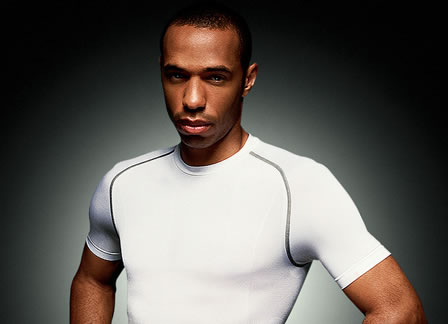
Thierry Henry

Henry was born in Les Ulis, Essonne (a suburb of Paris) where he played for an array of local sides as a youngster and showed great promise as a goal-scorer. He was spotted by AS Monaco in 1990 and signed instantly, making his professional debut in 1994. Good form led to an international call-up in 1998, after which he signed for the Serie A defending champions Juventus. He had a disappointing season playing on the wing, before joining Arsenal for £11 million in 1999.

Thierry Henry Got Medals For His Best Perfromance

Thierry Henry Elegant Performance

Henry was a member of France's Euro 2000 championship squad, again scoring three goals in the tournament, including the equalizer against Portugal in the semi-final, and finishing as the country's top scorer. France later won the game in extra time following a converted penalty kick by Zinédine Zidane. France went on to defeat Italy in extra time in the final, earning Henry his second major international medal. During the tournament, Henry was voted man-of-the-match in three games, including the final against Italy.


Thierry Henry Greatest Goals

Thierry Henry Cool Fashion

Henry has received many plaudits and awards in his football career. He was runner-up for the 2003 and 2004 FIFA World Player of the Year award; in those two seasons, he also won back-to-back PFA Players' Player of the Year titles. Henry is the only player ever to have won the Football Writers' Association Footballer of the Year three times (2003, 2004, 2006), and the French Player of the Year on a record four occasions. Henry was voted into the Premier League Overseas Team of the Decade in the 10 Seasons Awards poll in 2003, and in 2004 he was named by football legend Pelé as one of the top 125 greatest living footballers.

Henry is currently third in the list of all-time Premier League goal-scorers, behind Alan Shearer and Andy Cole. Given his accomplishments, France's all-time goal-scorer was in his prime regarded by many coaches, footballers and pundits as one of the best footballers in the world. In November 2007, he was ranked 33rd on the Association of Football Statisticians' compendium for "Greatest Ever Footballers". Arsenal fans honoured their former player in 2008, declaring Henry the greatest Arsenal player. In another 2008 survey, Henry emerged as the favourite Premier League player of all time among 32,000 people surveyed in the Barclays 2008 Global Fan Report.

Tuesday, April 12, 2011

Luca Toni

Luca Toni, (born 26 May 1977 in Pavullo nel Frignano, Modena) is an Italian World Cup-winning footballer who is currently playing for Serie A club Juventus. He has had successful spells at top clubs such as Palermo, Fiorentina, Bayern Munich and Roma. Toni is highly regarded for his goal scoring ability as can be seen by his prolific goals to games ratio at many of his clubs. His style is at times seen as being unorthodox, however his strength and power have seen him become one of Serie A's most lethal finishers of the past decade. As well as the medals he has collected he has also won several individual honours including the Capocannonieri for the 2005–06 season in which he scored 31 goals. Toni started his professional career at Modena. This was followed by a number of seasons spent around Serie B and Serie C1 with teams such as Empoli, Fiorenzuola and Lodigiani. After a Serie B season with Treviso in 1999, he moved to Vicenza Calcio, playing in Serie A for the first time. He then moved to Brescia Calcio, playing for two seasons alongside Roberto Baggio. Toni made his debut for the Italian national team as a substitute on 18 August 2004 in a friendly match against Iceland. He scored his first international goal in a World Cup Qualifying match against Norway on 4 September 2004. On 17 November, Toni made his international start in a friendly match against Finland. On 11 June 2005, he captained the Italian squad for the first time in his career in a friendly match against Ecuador because of the absence of current captain Fabio Cannavaro and other experienced players. On 7 September, Toni scored his first international hat-trick in a 4–1 victory against Belarus in a 2006 World Cup qualifying match. Toni was selected to Italy's 2006 World Cup squad, and scored two goals in the quarter-finals against Ukraine on 30 June, his only goals of the tournament. In the final against France, he hit the crossbar with a powerful header and later netted another header although the goal was disallowed as the attempt was ruled offside. Toni scored two goals in Italy's 2–0 win over Scotland in a Euro 2008 qualifier. Due to the aforementioned foot surgery, he missed Italy's next two qualifiers against the Faroe Islands and Lithuania. He returned to the qualification games against Georgia, and assisted Fabio Grosso, who scored the final result (2–0). On 17 November 2007, Toni struck in the first minute of a 2–1 qualifier win over Scotland at Hampden Park, which secured Italy's place at the final stages. Four days later, he scored the second goal against the Faroe Islands, as Italy closed with a 3–1 win. He was called up to the Italian Squad for Euro 2008, but his form in the tournament was disappointing, with his only goal against Romania being disallowed for offside. Toni's main contribution for the team was winning a penalty kick against France, which ended 2–0. Italy then bowed out of the tournament on penalty kicks to Spain in the quarter-final. Despite the Euro 2008 disappointment, Toni was called up by coach Marcello Lippi for Italy's first two 2010 World Cup qualifers. Toni also scored an equaliser against Greece in an international friendly, where the match ended 1–1. He was successively not included in Marcello Lippi's provisional 30-man Italian squad for the 2010 FIFA World Cup.

Luca Toni Will Kick The Ball

Luca Toni Sexy Performance

Luca Toni Fashion Style

Luca Toni Typical Style During The Match

Luca Toni Cool Pose

Luca Toni Happiness Expression After He Make a Goal

Luca Toni Masculine Pose

Luca Toni Pray To God

Monday, April 4, 2011

Gabriel Batistuta

Gabriel Omar Batistuta (born 1 February 1969), nicknamed Batigol is a former professional footballer. The prolific Argentine striker played most of his club football at Fiorentina in Italy, and he is the ninth top scorer of all time in the Italian Serie A league, with 184 goals in 318 matches. On the international level, he is Argentina's all-time leading goal scorer, with 56 goals in 78 national team matches, and he represented his country at three World Cups. In 2004, he was named in the FIFA 100 list of the "125 Greatest Living Footballers". When his club Fiorentina was relegated to Serie B in 1993, Batistuta stayed with the club and helped it return to the top-flight league a year later. A popular sporting figure in Florence, the Fiorentina fans erected a life-size bronze statue of him in 1996, in recognition of his performances for Fiorentina. He never won the Italian league with Fiorentina, but when he moved to Roma in 2000, he finally won the Serie A championship to crown his career in Italy. He played his last professional season in Qatar with Al-Arabi before he retired in 2005. At the age of 16, he met Irina Fernández, his future wife, at her quinceañera, a rite of passage on her 15th birthday. She is reported to have ignored him but five years later, on 28 December 1990, they were married at Saint Roque Church. The couple moved to Florence, Italy, in 1991, and a year later their first son, Thiago, was born. Thanks to good performances in the Italian championship and with the Argentine national team, Batistuta gained fame and respect. He filmed several commercials and was invited onto numerous TV shows, but in spite of this, Batistuta always remained a low-profile family man.Batistuta ended his career at Al-Arabi, retiring in March 2005, after a series of injuries that prevented him from playing. Soon afterwards he moved to Perth, Australia. In April 2006, the city's established A-league franchise, Perth Glory was put up for sale however Batistuta was not interested in the purchase seeing no real potential in the club.
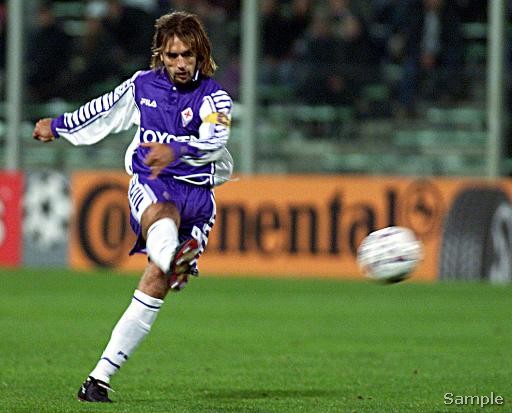

As a child, Batistuta preferred other sports to football. Because of his height he played basketball, but after Argentina's victory in the 1978 FIFA World Cup, in which he was particularly impressed by the skills of Mario Kempes, he devoted himself to football. After playing with friends on the streets and in the small Grupo Alegria club, he joined the local Platense junior team. While with Platense he was selected for the Reconquista team that won the provincial championship by beating Newell's Old Boys from Rosario. His 2 goals drew the attention of the opposition team, and he signed for them in 1988.Batistuta signed professional forms with Newell's Old Boys, whose coach was Marcelo Bielsa, who would later become Batistuta's coach with the Argentine national team. Things did not come easily for Batistuta during his first year with the club. He was away from home, his family, and his girlfriend Irina, sleeping in a room at the stadium, and had a weight problem that slowed him down. At the end of that year he was loaned to a smaller team, Deportivo Italiano, of Buenos Aires, with whom he participated in the Carnevale Cup in Italy, ending as top scorer with 3 goals.While playing for Argentina in the 1991 Copa América, the vice-president of Fiorentina was impressed by Batistuta's skills and signed him for the Italian club. He had a fine start in Serie A, scoring 13 goals in his debut season. However, the following season (Serie A 1992-93) Fiorentina lost in the relegation battle and were demoted to the Serie B division, despite Batistuta's 16 season goals. The club returned to Serie A after one season in Serie B, with the contribution of 16 goals from Batistuta and the management of Claudio Ranieri. Batistuta stayed at Fiorentina for the 1999-00 season, tempted by the chance of winning both the Scudetto and the Champions League. After a promising start in both competitions, the team only reached seventh in the league and were eliminated in the second round group phase of the European tournament. The following season, he was transferred to Roma in a deal worth 70 billion Italian lire and signed a 3-year contract, which earned 14.8 billion Italian lire per year before tax.


Batistuta failed to find form with Roma and was loaned out to Internazionale; however, he failed to make an impression scoring only 2 goals in 12 matches and departed for Qatari team Al-Arabi on a free transfer. In Qatar, he broke the record for most goals scored that was held by Qatari Legend Mansour Mouftah by scoring 24 goals. He scored more goals for the club than the number of games he played. He was awarded for being the top scorer in all Arab leagues in 2004 with a Golden Boot. In 1991, Batistuta was selected to play for Argentina in the Copa América held in Chile, where he finished the tournament as top scorer with six goals as Argentina romped to victory. In 1993, Batistuta played in his second Copa América, this time held in Ecuador, which Argentina again won. The 1994 World Cup, held in USA, was a disappointment: after a promising start Argentina were beaten by Romania in the last 16. The morale of the team was seriously affected by Diego Maradona's doping suspension. Despite the disappointing Argentine exit, Batistuta scored four goals in as many games, including a hat-trick in their opening game against Greece. During the qualification matches for the 1998 World Cup (with former River Plate manager Daniel Passarella) Batistuta was left out of the majority of the games after falling out with the coach over team rules. The two eventually put the dispute aside and Batistuta was recalled for the tournament. In the game against Jamaica, he recorded the second hat trick of his World Cup career, becoming the 4th player to achieve this (the others were Sándor Kocsis, Just Fontaine, and Gerd Müller) and the first to score a hat trick in 2 World Cups. Unfortunately, Argentina were knocked out of the World Cup the Netherlands courtesy of a last-minute Dennis Bergkamp winner after the two sides had held out for a 1-1 draw for almost the entire match. After a good series of performances by Argentina in the qualification matches for the 2002 World Cup, hopes were high that the South Americans - now managed by Marcelo Bielsa - could win the trophy, and Batistuta announced that he planned to quit the national team at the end of the tournament, which Argentina aimed to win. But Argentina's "group of death" saw the team fall at the first hurdle, only managing a victory against Nigeria. They later fell to England 1-0 and managed a mere 1-1 tie against Sweden. This meant that the team was knocked out in the opening round for the first time since 1962.